Blog / 3 Row SUVs

2025 Ford Explorer vs Expedition for Cody WY

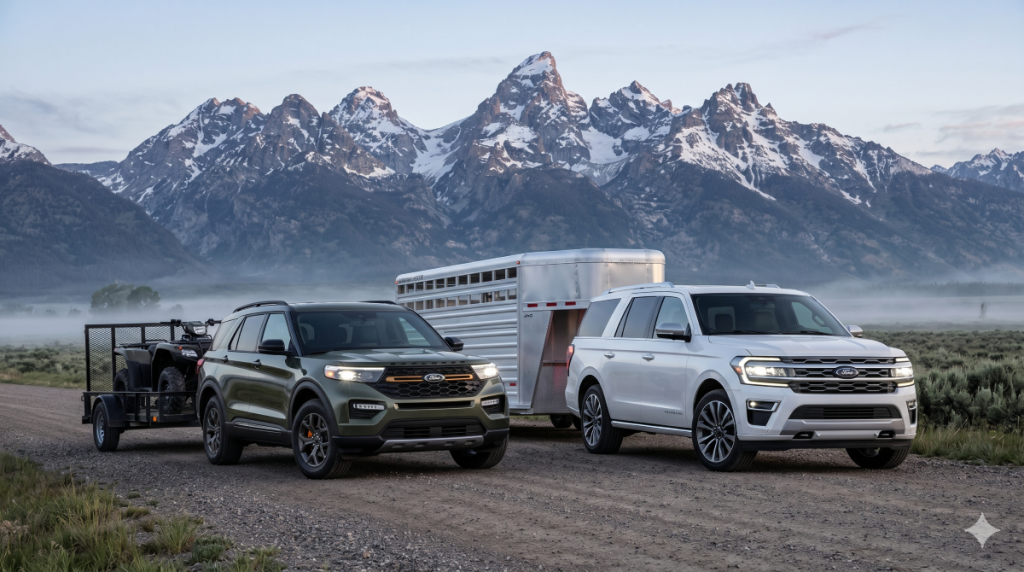
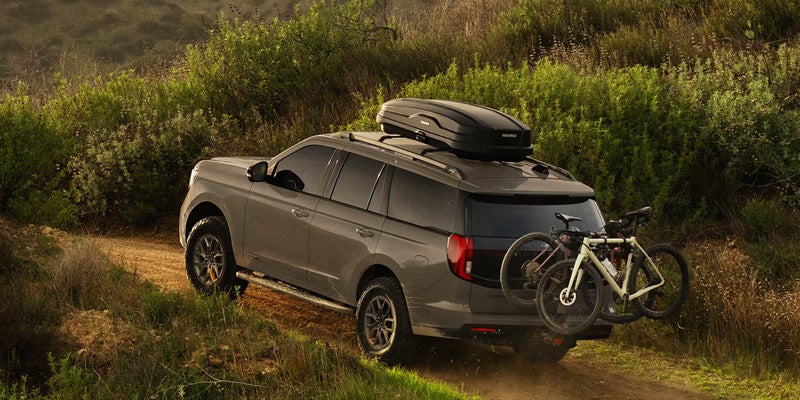
Ford Explorer vs Expedition towing with mountains in the background
AI generated image of a 2026 Ford Explorer and Expedition.

2026 3-Row SUV Showdown: Ford Explorer vs. Expedition

Which One Fits Your Wyoming Life (and Your Garage)?

Choosing between the 2026 Ford Explorer and the Expedition is about more than just "Mid-size vs. Full-size." It’s about how much space you need behind the seats and how much weight you plan to pull over the Absaroka passes.

1. The Towing Reality Check

While both SUVs look rugged, their mechanical "muscles" are in different weight classes.

Feature2026 Ford Explorer2026 Ford Expedition
Max Towing5,000 lbs (Standard)9,600 lbs (Properly Equipped)
Standard Towing5,000 lbs6,000 lbs
The "Catch"5,000 lbs is standard on all trims.Requires Heavy-Duty Trailer Tow Package and 3.73 axle.

The Peer Advice: If you’re pulling a 2-horse trailer or a 25-foot camper, you must get the Expedition with the Heavy-Duty Trailer Tow Package. Without it, the Expedition is capped at 6,000 lbs, barely more than the Explorer. Also, note that for trailers over 7,000 lbs, Ford requires a weight-distributing hitch.

2. Passenger Comfort: The "Third Row" Test

Both vehicles have three rows, but they serve very different purposes.

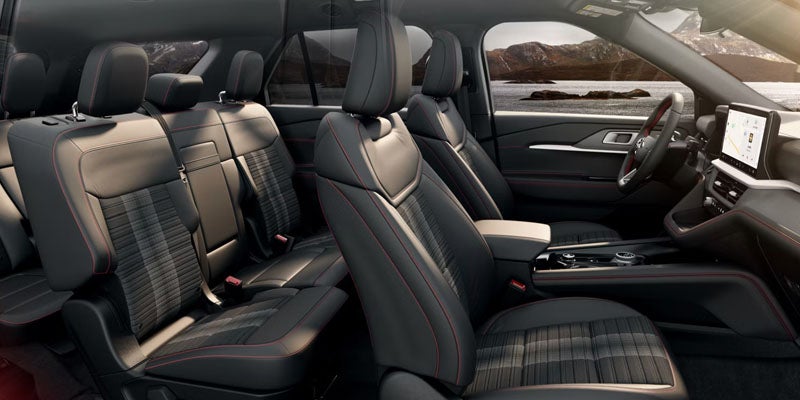
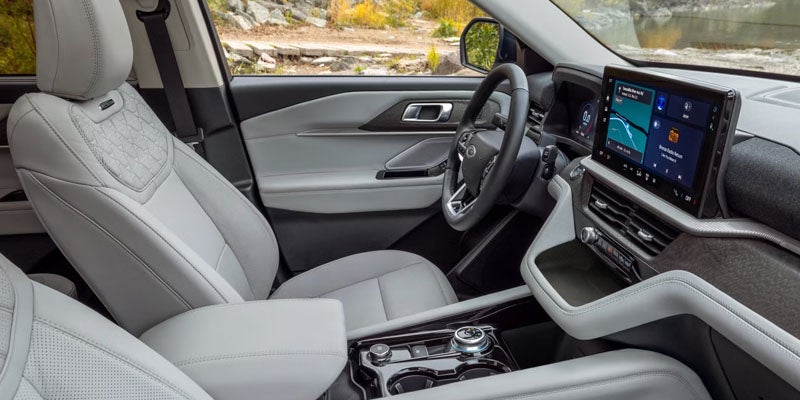
2026 Ford Explorer 3 row Interior
2026 Ford Explorer Interior. Photo: Ford.
  • Explorer (6-7 Seats): The third row is best reserved for kids or short trips around Cody. It offers about 32 inches of legroom. If you have adults or tall teenagers, they will feel cramped on a drive to Billings.
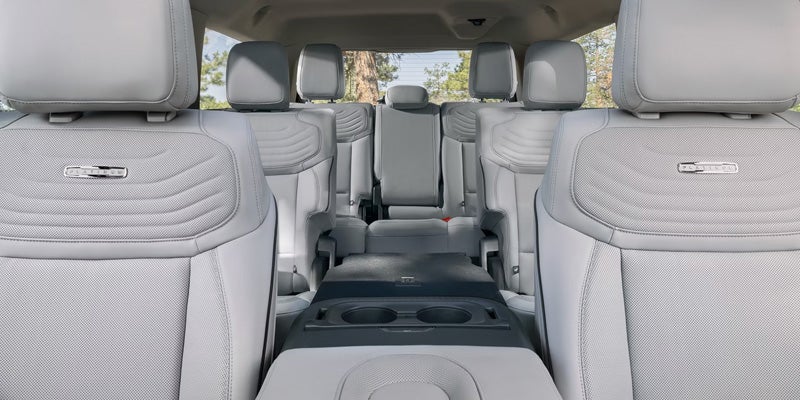
  • Expedition (7-8 Seats): This is a true adult-sized third row with roughly 36 inches of legroom. It can comfortably seat three kids or two adults for long-distance travel.
  • The Cargo Gap: In the Explorer, with the third row up, you have just 16.3 cu. ft. of space (enough for groceries). The Expedition offers 22.9 cu. ft., and the Expedition MAX provides a massive 37.4 cu. ft.—the only way to haul 7 people and all their luggage inside the vehicle.
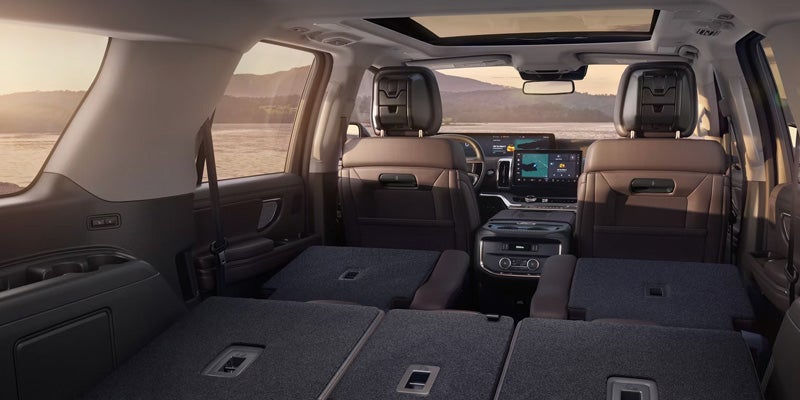
3rd row folder in Expedition
Expedition with 2nd and 3rd rows folded. Photo: Ford.
2026 Ford Expedition Interior. Photo: Ford.

3. The "Garage Factor" (Measure Before You Buy!)

A common mistake for Cody and Meeteetse buyers is bringing home a new SUV that doesn't fit in the garage.

  • Explorer (~199 inches): Generally fits in any standard 20-foot deep garage with room to walk around.
  • Expedition (~210 inches): At 17.5 feet long, it fits in most modern garages, but it’s tight.
  • Expedition MAX (~222 inches): At 18.5 feet, the MAX often leaves only inches of clearance. If your garage is a standard 20-foot depth, you may find it impossible to walk behind the vehicle with the door closed.
Ford Expedition. Photo: Ford.

4. Technology: The 2026 Digital Experience

This is where the 2026 models truly diverge from older versions you might see on used lots.

  • The Explorer: Features a high-mounted 13.2-inch touchscreen. It’s intuitive and uses Google-based software for seamless Maps and Assistant integration.
  • The Expedition: Features a game-changing 24-inch panoramic display. It sits higher up near the windshield, acting like a massive Head-Up Display that spans half the dashboard. For long highway hauls, this reduces eye strain significantly.
Explorer interior front row. Photo: Ford.

5. Pricing & Trim Value

2026 TrimExplorer MSRPExpedition MSRP
Base/Active$38,465$62,700
Luxury (Platinum)$50,965$74,250
Off-Road (Tremor)$48,465$81,700

The Verdict: Which fits your lifestyle?

Choose the 2026 Explorer if:

  • You mostly drive solo or with 2-4 passengers.
  • You prioritize fuel economy (up to an EPA-Estimated 29 Hwy MPG).
  • You need to park in tight spots in downtown Cody or Laurel.
  • Your "towing" is limited to a small utility trailer or a jet ski.

Choose the 2026 Expedition if:

  • You regularly haul 5+ people (especially teens or adults).
  • You need to tow over 5,000 lbs (Livestock, large boats, or campers).
  • You want the latest tech (the 24-inch display is a showstopper).
  • Pro Tip: Choose the MAX version only if you plan to keep the third row up and still need room for a week's worth of gear.

Experience them both at Fremont Ford Cody.

Visit us at 3127 Big Horn Ave or schedule your mountain-ready test drive today.

Posted in:

Related Posts

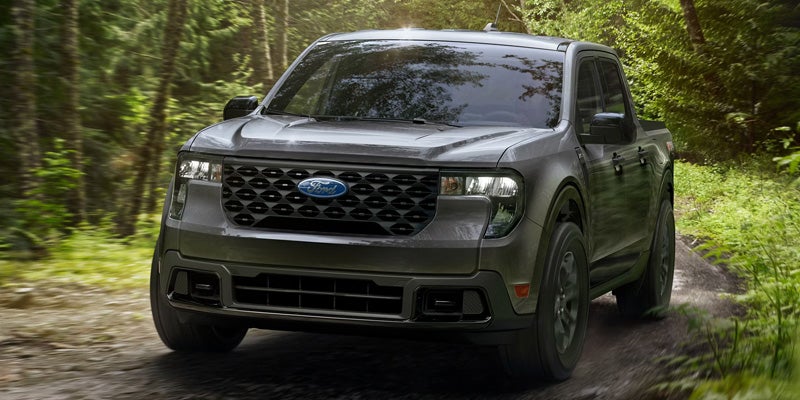
2026 Ford Maverick driving through the woods

2026 Ford Ranger vs. 2026 Ford Maverick: Specs, Towing & Hybrid Trade-In Guide

2026 Ford Ranger vs. 2026 Ford Maverick: Quick Comparison for Cody & Big Horn Basin Drivers Choosing between the 2026 Ford Ranger and the 2026 Ford Maverick comes down to frame construction, towing requirements, and daily fuel efficiency across Park County. Both SuperCrew® four-door pickups seat five passengers and offer all-weather traction for Wyoming winters, but they are built on distinct platforms for different workloads: 2026 Ford Maverick (Compact Unibody Pickup): Delivers an EPA-estimated 42 city / 35 highway / 38 combined mpg with the standard 2.5L Hybrid FWD, or an EPA-estimated 40 city / 34 highway / 37 combined mpg with available 2.5L Hybrid AWD. Both the 2.5L Hybrid AWD and 2.0L EcoBoost® AWD tow up to 4,000 lbs. when properly equipped with the available 4K Tow Package (53Q) and carry up to 1,500 lbs. maximum payload when properly equipped. 2026 Ford Ranger (Midsize Body-on-Frame Pickup): Built on a fully boxed high-strength steel frame with a two-speed electronic shift-on-the-fly 4x4 transfer case (2.72:1 low range on XL, XLT, and Lariat®; 3.06:1 on Raptor®). Pulls up to 7,500 lbs. maximum conventional towing capacity when properly equipped and hauls up to 1,767 lbs. maximum payload when properly equipped. Should You Trade a Ford Ranger for a Maverick Hybrid? If your trailers stay under 4,000 lbs. and you commute regularly between Cody, Powell, Lovell, or Billings, trading a traditional midsize pickup for a 2026 Maverick Hybrid AWD with the 4K Tow Package cuts fuel consumption nearly in half while retaining four-season all-wheel-drive traction. 2026 Ford Maverick SuperCrew® Trims: XL, XLT, Lobo™, Lariat®, Tremor® Powertrains: 2.5L Hybrid (FWD/AWD) or 250-hp 2.0L EcoBoost® I-4 (FWD/AWD/4WD) Max Towing: 4,000 lbs. when properly equipped Max Payload: 1,500 lbs. when properly equipped Shop New Maverick Inventory » 2026 Ford Ranger SuperCrew® Trims: XL, XLT, Lariat®, Raptor® Powertrains: 270-hp 2.3L EcoBoost®, 315-hp 2.7L Twin-Turbo V6, or 405-hp 3.0L Twin-Turbo V6 Max Towing: 7,500 lbs. when properly equipped Max Payload: 1,767 lbs. when properly equipped Shop New Ranger Inventory » 2026 Ford Ranger vs. 2026 Ford Maverick: Verified OEM Specifications Every figure below is sourced directly from official 2026 Ford Motor Company technical specification sheets so you can compare chassis dimensions, engine output, fuel capacity, and cargo measurements side by side. Specification 2026 Ford Maverick 2026 Ford Ranger Chassis & Cab Configuration Unibody SuperCrew® (4 full doors, 5 passengers) Fully boxed steel body-on-frame SuperCrew® (4 full doors, 5 passengers) 2026 Trim Lineup XL, XLT, Lobo™, Lariat®, Tremor® XL, XLT, Lariat®, Raptor® Standard Engine & Output 2.5L Atkinson-Cycle I-4 Hybrid + 94-kW electric traction motor (173 lb.-ft. battery peak) on 87 octane 2.3L EcoBoost® Turbo I-4: 270 hp @ 5,500 rpm / 310 lb.-ft. torque @ 3,000 rpm on 87 octane Available Engines & Output 2.0L EcoBoost® Turbo I-4: 250 hp @ 5,500 rpm / 280 lb.-ft. torque @ 3,000 rpm (rated on 91+ octane per SAE J1349) 2.7L EcoBoost® Twin-Turbo V6: 315 hp @ 5,000 rpm / 400 lb.-ft. torque @ 3,000 rpm (87 octane) 3.0L EcoBoost® Twin-Turbo V6 (Raptor®): 405 hp @ 5,750 rpm / 430 lb.-ft. torque @ 4,500 rpm (91+ octane) Transmissions PowerSplit eCVT (2.5L Hybrid); 8-speed automatic (2.0L EcoBoost®); 7-speed quick-shift automatic with paddle shifters (Lobo™) 10-Speed SelectShift® automatic transmission across all engines Drivetrain Systems Standard FWD; available AWD (Hybrid & EcoBoost®); Torque-Vectoring Twin-Clutch 4WD (Lobo™ & Tremor® with rear-drive unit lock) Standard 4x2; available electronic shift-on-the-fly 4x4 with 2-speed transfer case (2.72:1 low range); Advanced 4x4 on-demand (3.06:1 low range on Raptor®) Maximum Conventional Towing 4,000 lbs. when properly equipped (available 4K Tow Package on 2.5L Hybrid AWD & 2.0L EcoBoost® AWD; 2,000 lbs. standard) 7,500 lbs. when properly equipped (2.3L I-4 & 2.7L V6); 5,510 lbs. when properly equipped (3.0L V6 Raptor®) Maximum Payload Capacity 1,500 lbs. (Hybrid FWD & EcoBoost® FWD/AWD); 1,400 lbs. (Hybrid AWD); 1,140 lbs. (Tremor®); 1,045 lbs. (Lobo™) 1,767 lbs. (2.3L 4x2); 1,763 lbs. (2.3L 4x4); 1,513 lbs. (2.7L V6 4x4); 1,373 lbs. (Raptor® 4x4) EPA-Estimated Fuel Economy (City / Hwy / Combined) 2.5L Hybrid FWD: 42 / 35 / 38 mpg 2.5L Hybrid AWD: 40 / 34 / 37 mpg (Lariat®: 39 / 32 / 36 mpg) 2.0L EcoBoost® FWD: 23 / 32 / 26 mpg 2.0L EcoBoost® AWD: 22 / 30 / 25 mpg Lobo™ 4WD: 21 / 30 / 24 mpg | Tremor® 4WD: 21 / 27 / 23 mpg EPA-estimated ratings vary by 2.3L, 2.7L V6, and 3.0L V6 configuration; 18.7-gallon fuel tank (20.3-gallon on Raptor®) built for extended mountain range Wheelbase & Overall Length 121.1 in. wheelbase | 199.8 in. length (200.6 in. Tremor®, 200.9 in. Lobo™) 128.7 in. wheelbase | 210.6 in. length (210.9 in. Raptor®) Minimum Ground Clearance 8.1 in. (Hybrid FWD/AWD); 8.3 in. (EcoBoost® AWD); 9.1 in. (Tremor® AWD); 7.4 in. (Lobo™) 9.3 in. (XL, XLT, Lariat® 4x2 & 4x4); 10.7 in. (Raptor® 4x4) Cargo Box Dimensions & Volume 54.4 in. floor length | 42.6 in. width between wheelhouses | 33.3 cu. ft. volume 59.6 in. floor length | 48.2 in. width between wheelhouses | 43.5 cu. ft. volume Max Legroom (Front / Rear) 42.8 in. front / 35.9 in. rear (Hybrid) or 36.9 in. rear (EcoBoost®) 43.2 in. front / 34.6 in. rear Trading In a Ford Ranger for a 2026 Maverick Hybrid: Does It Make Sense in Wyoming? One of the most frequent questions our team at Fremont Ford Cody hears from Big Horn Basin truck owners is whether to trade in an older midsize Ford Ranger for a new 2026 Ford Maverick Hybrid. In earlier model years, shoppers had to choose between the fuel-sipping 2.5L Hybrid (which was previously restricted to front-wheel drive and a 2,000-lb. tow limit) or the 2.0L EcoBoost® gas engine if they needed all-wheel drive and 4,000-lb. towing. For 2026, Ford pairs the 2.5L Atkinson-Cycle Hybrid powertrain with available All-Wheel Drive (AWD) AND the available 4K Tow Package (Option Code 53Q). That engineering update changes the trade-in equation for Park County drivers: When Trading Into a 2026 Maverick Hybrid AWD Is a Practical Choice: If your daily drive involves commuting along US-14A between Cody and Powell, running errands down Big Horn Avenue, or making frequent highway trips to Billings, the 2026 Maverick Hybrid AWD delivers an EPA-estimated 40 city / 34 highway / 37 combined mpg. When equipped with the 4K Tow Package (which adds a Class III 2-inch receiver hitch, 7-pin trailer wiring connector, integrated trailer brake controller, transmission oil cooler, and upgraded cooling fan), the Maverick Hybrid AWD still pulls up to 4,000 lbs. when properly equipped —plenty for a pair of snowmobiles, a side-by-side UTV, a drift boat for the Shoshone or Bighorn River, or a lightweight teardrop camper. When Keeping or Upgrading to a 2026 Ford Ranger 4x4 Fits Your Workload: If you pull a dual-axle travel trailer over Sylvan Pass, haul a two-horse bumper-pull trailer, or carry heavy fencing and ranch supplies that demand a two-speed transfer case (4-Low) and up to 7,500 lbs. of towing capacity when properly equipped, the body-on-frame 2026 Ranger remains the right tool. Rear-Seat Cabin Space Comparison: Many midsize truck owners are surprised to learn that the unibody 2026 Maverick actually provides slightly more rear legroom ( 35.9 inches on Hybrid and 36.9 inches on EcoBoost®) than the 2026 Ranger ( 34.6 inches), along with under-seat rear storage bins. Get Your Instant Ford Trade-In Appraisal » Explore 2026 Maverick Research » Engine Lineup & Performance Across the Absaroka & Bighorn Mountains Cody sits at 5,016 feet above sea level, and routes heading west up the North Fork Highway toward Pahaska Tepee and Yellowstone National Park climb past 8,500 feet. At high elevation, thinner air reduces combustion pressure in naturally aspirated engines by roughly 3% per 1,000 feet of ascent. Here is how each 2026 Maverick and 2026 Ranger powertrain responds to Wyoming mountain grades: 2026 Maverick 2.5L Hybrid (FWD & Available AWD): Combines a 2.5L Atkinson-cycle four-cylinder engine with a 94-kW permanent-magnet electric traction motor generating 173 lb.-ft. of peak battery torque through a PowerSplit electronic continuously variable transmission (eCVT). Electric motor torque is instantaneous and unaffected by elevation, giving the Maverick brisk low-speed response around town and smooth regenerative braking on long canyon descents. 2026 Maverick 2.0L EcoBoost® Turbo I-4 (FWD, AWD, Lobo™ & Tremor®): Produces 250 horsepower at 5,500 rpm and 280 lb.-ft. of torque at 3,000 rpm (ratings achieved using 91+ octane premium fuel per SAE J1349). Turbocharging compresses thin mountain air to preserve passing power climbing Chief Joseph Scenic Byway (WY-296) or McCullough Peaks. 2026 Ranger 2.3L EcoBoost® Turbo I-4: Standard across XL, XLT, and Lariat®, this 16-valve turbocharged four-cylinder with cast-iron cylinder liners generates 270 horsepower at 5,500 rpm and 310 lb.-ft. of torque at 3,000 rpm on regular 87-octane fuel, mated to Ford's 10-speed SelectShift® automatic transmission. 2026 Ranger 2.7L EcoBoost® Twin-Turbo V6: Built with a compacted graphite iron (CGI) upper cylinder block borrowed from the F-150 and Super Duty diesel architecture, the available 2.7L V6 delivers 315 horsepower at 5,000 rpm and 400 lb.-ft. of torque at 3,000 rpm on 87-octane fuel. That extra 90 lb.-ft. of twin-turbo torque makes a noticeable difference when pulling a 6,500-lb. camper against Big Horn Basin headwinds. 2026 Ranger Raptor® 3.0L EcoBoost® Twin-Turbo V6: Exclusive to the desert- and trail-ready Ranger Raptor®, this twin-turbo V6 produces 405 horsepower at 5,750 rpm and 430 lb.-ft. of torque at 4,500 rpm (rated on 91+ octane fuel per SAE J1349) with an anti-lag system in Baja mode. Off-Road Hardware & Wyoming Winter Traction: AWD vs. 2-Speed 4x4 Driving across Park County from November through April means encountering wind-swept snowdrifts on Highway 120, icy bridge decks over the Shoshone River, and muddy two-track trails in the spring thaw. Both trucks offer specialized traction packages tailored to different terrain: Maverick AWD & Tremor® Twin-Clutch 4WD: Available AWD on XL, XLT, and Lariat® automatically distributes torque between the front and rear axles on slick pavement without driver intervention. Stepping up to the 2026 Maverick Tremor® adds an advanced 4WD system with a twin-clutch rear-drive unit capable of locking rear torque side-to-side, off-road-tuned suspension lifting minimum ground clearance to 9.1 inches, steel skid plates, Trail Control™, and Trail One-Pedal Drive. Maverick Lobo™ Street-Tuned 4WD: New for drivers who prefer tarmac agility, the 2026 Maverick Lobo™ pairs the 250-hp 2.0L EcoBoost® and a 7-speed quick-shift automatic transmission with torque-vectoring twin-clutch 4WD, a lowered 7.4-inch ride height, performance-tuned steering, and dual-piston front brake calipers. Ranger Electronic Shift-on-the-Fly 4x4 & FX4 Off-Road Package: Unlike crossover-based AWD systems, the 2026 Ranger 4x4 features a mechanical two-speed transfer case with 2H, 4H, and 4L (2.72:1 low-range gear reduction) plus a solid rear axle with leaf springs and 9.3 inches of ground clearance. Adding the available FX4 Off-Road Package equips your Ranger with an electronic-locking rear differential, off-road-tuned shocks, steel bash plate, exposed front tow hooks, and Ford Trail Control™. Ranger Raptor® 4x4 Capability: Engineered for extreme backcountry trails, the 2026 Ranger Raptor® increases ground clearance to 10.7 inches, widens the track to 79.8 inches (excluding mirrors), and adds front and rear electronic locking differentials, a Watts-link coil-sprung rear suspension, and 2.5-inch FOX™ Live Valve internal-bypass shocks. Bed Dimensions, Cargo Volume & Practical Ranch Utility Whether you are loading firewood, drywall sheets, hunting camp gear, or fencing posts, bed geometry determines how you pack your truck: 2026 Maverick 4.5-Foot FLEXBED™ (33.3 Cubic Feet): Measures 54.4 inches long at the floor and 42.6 inches wide between the wheelhouses (53.3 inches wide at the wall). The multi-position tailgate locks halfway up to align flush with the wheelhouses, allowing you to carry 4x8 sheets of plywood flat across the wheelwells. Standard 12-volt pre-wired bed electrical leads, up to 10 tie-down points, and available 400-watt / 120V in-bed outlets turn the compact bed into a mobile workspace. 2026 Ranger 5-Foot Cargo Box (43.5 Cubic Feet): Measures 59.6 inches long at the floor and a full 48.2 inches wide between the wheelhouses —meaning 4-foot-wide sheets of plywood or OSB slide flat right onto the bed floor between the wheelwells without needing to rest on top of the arches. The Ranger bed also offers integrated box-side step pads behind the rear tires, a tailgate workbench ruler with clamp pockets, and an available 400-watt in-bed power inverter. Fremont Care Coverage & Local Ford Service in Cody, WY Buying a new 2026 Ford Maverick or 2026 Ford Ranger—or an eligible pre-owned truck—at Fremont Ford Cody includes practical local ownership support built for Big Horn Basin drivers: Fremont Care Maintenance Plan: Fremont Care comes with eligible vehicle purchases at Fremont Ford Cody and provides 2 oil changes and 2 tire rotations within the initial 12 months of ownership on qualifying new Ford and eligible pre-owned vehicles. Ford Service on Big Horn Avenue: Our 24,000-square-foot facility at 3127 Big Horn Avenue, Cody, WY 82414 features 10 service bays, a four-wheel alignment rack, a quick lube bay, and genuine Motorcraft® fluids and parts to keep your EcoBoost® turbochargers or Hybrid eCVT operating at factory spec. Straightforward Trade-In & Financing Support: Whether you are trading in a high-mileage Ranger for a 2026 Maverick Hybrid or stepping up to a 2026 Ranger 2.7L V6 4x4, our team provides transparent market trade appraisals and tailored financing options. Frequently Asked Questions: 2026 Ford Ranger vs. 2026 Ford Maverick Can the 2026 Ford Maverick Hybrid tow 4,000 lbs. with All-Wheel Drive? Yes. For 2026, the 2.5L Hybrid powertrain is available with All-Wheel Drive (AWD) and can be ordered with the available 4K Tow Package (53Q), giving both the 2.5L Hybrid AWD and the 2.0L EcoBoost® AWD a maximum conventional towing capacity of 4,000 lbs. when properly equipped. Front-wheel-drive Maverick models are rated to tow 2,000 lbs. when properly equipped. How much can the 2026 Ford Ranger tow compared to the 2026 Maverick? The 2026 Ford Ranger offers a maximum conventional towing capacity of 7,500 lbs. when properly equipped with the Trailer Tow Package on 2.3L EcoBoost® I-4 (4x2 and 4x4) and 2.7L EcoBoost® Twin-Turbo V6 (4x4) models, while the 2026 Ranger Raptor® 3.0L V6 4x4 is rated to tow up to 5,510 lbs. when properly equipped. That gives the Ranger up to 3,500 lbs. more towing capacity than a properly equipped 2026 Maverick (4,000 lbs. max). What is the fuel economy of the 2026 Ford Maverick Hybrid? According to official 2026 Ford specifications, the 2026 Ford Maverick 2.5L Hybrid FWD achieves an EPA-estimated 42 city / 35 highway / 38 combined mpg. The 2026 Maverick 2.5L Hybrid AWD achieves an EPA-estimated 40 city / 34 highway / 37 combined mpg on XL and XLT trims (39 city / 32 highway / 36 combined mpg on Lariat® Hybrid AWD). Which truck has more rear legroom: the 2026 Maverick or the 2026 Ranger? Both trucks are five-passenger, four-door SuperCrew® pickups, but the unibody 2026 Ford Maverick provides slightly more second-row legroom—measuring 35.9 inches in Hybrid models and 36.9 inches in 2.0L EcoBoost® gas models, compared to 34.6 inches of rear legroom in the 2026 Ford Ranger. The Ranger offers slightly more maximum front legroom at 43.2 inches versus 42.8 inches in the Maverick. Does Fremont Care come with a new 2026 Ford Ranger or Maverick in Cody, WY? Yes. Because Ford does not bundle an OEM scheduled maintenance package from the factory, new 2026 Ford Ranger and 2026 Ford Maverick purchases at Fremont Ford Cody come with Fremont Care, which provides 2 oil changes and 2 tire rotations within the initial 12 months of ownership on eligible vehicle purchases. Compare the 2026 Ford Ranger & 2026 Maverick Side by Side in Cody, WY Test-drive both the 2026 Ford Maverick and the 2026 Ford Ranger at Fremont Ford Cody, located at 3127 Big Horn Avenue, Cody, WY 82414. Value your trade online or call our sales team at (307) 206-3077 to schedule a back-to-back comparison drive. Browse New Maverick Inventory » Browse New Ranger Inventory » Value Your Trade-In » *Towing and payload capacities are for properly equipped vehicles with required equipment and vary by powertrain, drivetrain, and trim configuration. Always consult your vehicle owner's manual and door-jamb certification label for specific vehicle weight ratings. EPA-estimated fuel economy ratings are for comparison purposes only; actual mileage will vary based on driving conditions, elevation, vehicle maintenance, and hybrid battery age. Horsepower and torque ratings for the 2.0L EcoBoost® and 3.0L EcoBoost® V6 are achieved with 91-octane or higher premium fuel per SAE J1349® standard. Fremont Care comes with eligible vehicle purchases and includes 2 oil changes and 2 tire rotations within the first 12 months of ownership; see Fremont Ford Cody at 3127 Big Horn Avenue, Cody, WY 82414 for complete program eligibility details.

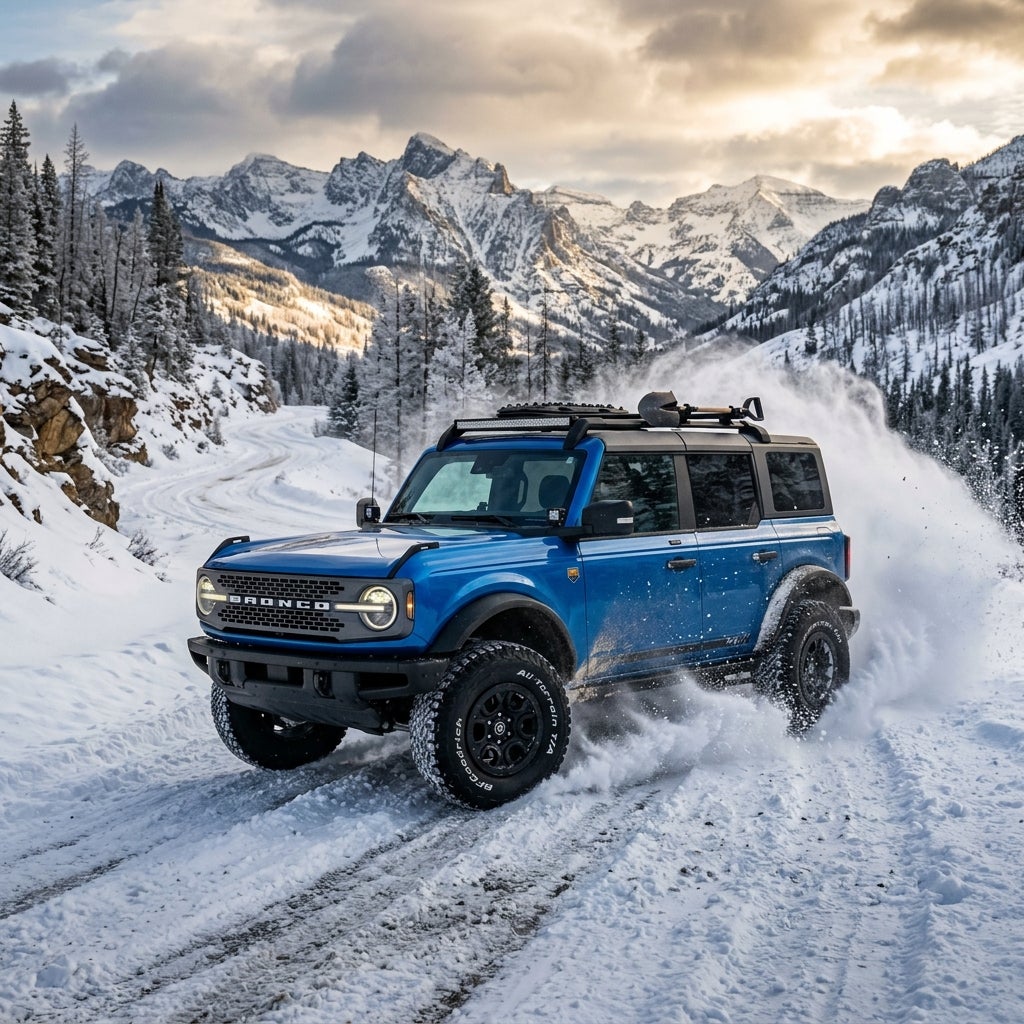
4x4 in snow wyoming

Conquering Wyoming Winters with Ford Bronco Built Wild Capability

Wyoming winters are legendary for their intensity, often bringing sub-freezing temperatures and heavy snow that can challenge even the most experienced drivers. The 2026 Ford Bronco is specifically engineered to meet these demands head-on. With its "Built Wild" heritage, this SUV utilizes a high-strength construction designed to handle deep icy ruts and heavy snow loads. Standard on every model is a robust 4WD system featuring selectable engagement. This mechanical setup ensures that power reaches the wheels, providing essential traction when local roads disappear under a thick white blanket. For residents living near the river valleys in Laurel, the winter landscape frequently transitions from slick ice to thick slush in a single afternoon. Having the available 2.7L V6 engine provides the low-end torque required to power through heavy, wet snow without straining the powertrain. This engine works in tandem with a smooth automatic transmission that manages gear changes intelligently, preventing the sudden wheel spin that often leads to losing control on frozen surfaces. At Fremont Ford Cody, we believe that confidence on the road comes from both a capable vehicle and a supportive dealership. Our commitment to your safety includes Fremont Care, which offers specialized maintenance benefits to keep your rig performing at its peak during the coldest months. Our local experts are always ready to help you prepare for the season. If you want to see these rugged features in person, you can find our showroom on Big Horn Ave or give our team a call at (307) 587-6206 to discuss winter-ready configurations. Taking these steps early ensures your vehicle remains a reliable tool for adventure throughout the season. Navigating Deep Snow and Mastering G.O.A.T. Modes on the Fly Wyoming winters rarely offer consistent road conditions, often shifting from dry pavement to deep powder in a matter of miles. When the wind picks up across the open plains near Worland, it can pile snow into massive drifts that would high-center a lesser vehicle. The 2026 Ford Bronco is specifically engineered to handle these sudden changes using its sophisticated Terrain Management System. This system features selectable G.O.A.T. Modes, which stands for "Goes Over Any Type of Terrain," allowing you to tune the chassis and powertrain to the environment outside your door. For those icy mornings when the asphalt is hidden under a layer of frost, Slippery mode is an essential tool. By rotating the dial on the center console, you recalibrate the available 10-speed automatic transmission and throttle response to prevent aggressive wheel spin. This mode also makes the traction control more proactive, helping you maintain a straight line even when the road surface is uneven or slanted. The 2026 lineup also highlights the highly capable Stroppe Edition, which enters the market as a specialized fleet option available only for military sales, offering a rugged foundation built on the Badlands series for maximum off-road performance. One of the most practical aspects of this technology is the ability to switch settings while the vehicle is in motion. As you move from a plowed main road to a snow-packed residential street, you can adjust the vehicle's brain without coming to a complete stop. This helps maintain the momentum necessary to push through heavy slush or deep accumulation. Many of the new Ford's 4x4 models available today also feature an advanced automatic on-demand 4x4 system. This setup monitors wheel slip in real-time and can automatically engage the axles when it senses a loss of grip, providing a seamless transition from fuel-efficient cruising to maximum traction. Having this level of mechanical intelligence at your fingertips ensures you can navigate the most challenging winter landscapes with total confidence. Bronco Sasquatch versus Wrangler Rubicon in Deep Winter Conditions When comparing the Bronco Sasquatch package to its main competitor, the Wrangler Rubicon, the discussion usually centers on ground clearance and tire flotation. In the deep drifts often found around Meeteetse, the Sasquatch package provides a distinct advantage with its factory high-clearance suspension. This extra height allows the underbody to glide over obstacles that might snag a standard crossover, keeping the chassis from getting high-centered when the roads disappear under heavy powder. While both rigs are incredibly capable, the Bronco utilizes an independent front suspension that offers a more composed ride on the frozen, "washboard" ruts common on rural routes. This setup absorbs the harsh vibrations of icy roads better than a traditional solid axle, which helps maintain steering precision and reduces driver fatigue during long winter commutes. The Sasquatch package also includes 35-inch rugged-terrain (R/T) tires that create a wider footprint. This footprint allows the vehicle to float across the top of deep snow rather than digging down into the ice. Mechanical grip is further enhanced by front and rear electronic-locking differentials included in the package. These systems mechanically lock the axle shafts together, ensuring that even if one wheel is spinning on a patch of glare ice near the Greybull River, the opposite wheel receives the torque needed to pull the vehicle forward. The available 2.7L V6 engine and automatic transmission provide steady, predictable power that is easy to modulate in low-traction situations. Choosing between these two legendary machines often comes down to modern refinement and long-term support. Every vehicle we sell comes with the added security of Fremont Care, providing scheduled maintenance and roadside assistance to keep your rig in top shape. If you are searching for a high-value option, we invite you to look through our selection of pre-owned 4x4 vehicles to find a configuration that fits your lifestyle. This combination of rugged hardware and reliable service makes the Bronco a standout choice for navigating the realities of a high-altitude winter. Conquering Wyoming Winters with Ford Bronco Built Wild Capability Wyoming winters demand a vehicle that does more than just move; they require a machine built to withstand sustained sub-freezing temperatures and unpredictable road surfaces. The 2026 Ford Bronco is engineered with Built Wild DNA, featuring a rugged construction that provides the structural rigidity needed for heavy snow loads and icy ruts. Every model comes standard with a robust 4WD system, ensuring that power is distributed to all four wheels when the pavement disappears under a layer of white. For those living near the river valleys in Laurel, the winter landscape often shifts from packed ice to slushy mud in a single afternoon. The available 2.7L V6 engine provides the low-end torque necessary to chug through heavy, wet snow without straining the powertrain. This engine is paired with an automatic transmission that manages gear shifts smoothly to prevent sudden wheel spin on slick surfaces. When the wind picks up near the Yellowstone River, the Bronco’s balanced weight distribution helps keep the chassis planted, giving you the confidence to navigate rural routes that haven't seen a plow yet. Reliability in the cold is about more than just traction; it is about knowing your vehicle is ready the moment you turn the key. Our team understands the importance of winter readiness, which is why we offer specialized inspections to ensure your battery and fluids are prepared for the drop in temperature. If you are ready to see how this SUV handles the elements, you can find our Cody showroom located right on Big Horn Ave. For immediate questions about winter-ready features, feel free to call (307) 587-6206 and speak with one of our local experts. Navigating Deep Snow and Mastering G.O.A.T. Modes on the Fly Deep snow performance is a hallmark of the Bronco experience, particularly when equipped with the terrain management system. This system features selectable G.O.A.T. Modes (Goes Over Any Type of Terrain), which allow the driver to calibrate the vehicle's behavior to the specific conditions outside. The Slippery mode is a vital tool for winter driving, as it optimizes throttle response and shift mapping to reduce wheel slip on ice or packed snow. It also adjusts the traction control parameters to be more proactive, helping you maintain a straight line even when the road surface is uneven. The 2026 lineup features the specialized Stroppe Edition, which serves as a high-capability fleet option available exclusively for military sales. This model is designed to handle the flat agricultural plains and drifting snow often found around Worland, where the wind can pile up several feet of powder across county roads. Drivers often ask me if they need to pull over to change their terrain settings, but the Bronco is designed for convenience; you can rotate the dial to switch between most modes while the vehicle is in motion. This allows you to adapt instantly as you move from a cleared highway to a snow-covered side street. When navigating truly deep drifts, the Bronco’s available advanced 4x4 system with automatic on-demand engagement provides an extra layer of security. This system can automatically shift between drive modes based on detected wheel slip, ensuring you have the grip you need without having to manually intervene. You can browse our current new Ford selection to find models equipped with these advanced drivetrain options. Having the right mode engaged can be the difference between a smooth commute and getting high-centered in a drift. Bronco Sasquatch versus Wrangler Rubicon in Deep Winter Conditions When comparing the Bronco Sasquatch package to its primary rival, the Wrangler Rubicon, the conversation often turns to ground clearance and tire flotation. The Sasquatch package provides a critical advantage when driving through unplowed snow by adding a factory high-clearance suspension. This height allows the underbody to clear obstacles that would stop a standard crossover. While both vehicles are highly capable, the Bronco’s independent front suspension offers a more controlled ride on "washboard" ice and frozen ruts, which are common on the back roads of northwestern Wyoming. Engine & Performance Feature Specification Engine 2.7L V6 (Available option on select trims; 2.3L I-4 engine is standard on Base, Big Bend, Outer Banks, Badlands, and Heritage) Transmission Automatic (10-Speed) Drivetrain 4WD / 4x4 The Sasquatch package includes 35-inch rugged-terrain (R/T) tires that provide a wide footprint, allowing the vehicle to "float" on top of deep snow rather than digging in and getting stuck. Both the Bronco and the Rubicon offer front and rear locking differentials, which mechanically lock the axle shafts together. This ensures that even if one wheel is spinning on a patch of glare ice, the other wheel receives full torque to pull the vehicle forward. In the rugged foothills near the Greybull River, this mechanical grip is essential for climbing steep, snow-slicked grades. The Bronco’s available 2.7L V6 engine and automatic transmission provide a linear power delivery that is often easier to modulate in low-traction scenarios compared to more aggressive setups. While the Wrangler remains a formidable opponent, the Bronco's modern interior and tech integration make it a more comfortable place to spend a long winter commute. If you are looking for a high-value alternative, we invite you to explore our pre-owned vehicle inventory to see various highly capable 4x4 configurations. Choosing between these two often comes down to the feel of the steering and the ease of the tech, both of which the Bronco handles with a modern touch. Equipping Your Bronco with the Best Winter Tires and Cold Weather Gear While the factory tires are versatile, local drivers who face extreme conditions often opt for dedicated winter rubber. Specialized rubber compounds remain flexible in sub-zero temperatures, allowing the tread to "bite" into ice and snow to provide reliable stopping distances on Wyoming highways. We recommend a set of winter-specific tires to complement the Bronco’s mechanical grip. Extreme cold also requires attention to the engine's health, which is why the Engine Block Heater is a highly recommended option for our region. This optional feature keeps the engine warm while the vehicle is parked, reducing wear during cold starts and helping the cabin heater reach a comfortable temperature much faster. When I walk families through the cabin features, they usually ask about the climate controls first, and having an available block heater makes those cold mornings much more bearable. To ensure your vehicle is fully prepared for the first blizzard, you can schedule your winter inspection with our factory-trained technicians. We can check your battery's cold-cranking amps and ensure your antifreeze is at the proper concentration. If you are looking to upgrade to a new Bronco with these cold-weather features, you can start the process by completing our online credit application from the comfort of your home. Taking these steps early ensures that your vehicle is a tool for adventure rather than a source of winter stress. Essential Winter Maintenance and Undercarriage Care in Cody The road salt and de-icing chemicals used to keep our streets clear can be incredibly harsh on a vehicle's metal components. Over time, these substances can lead to corrosion on the frame rails, suspension mounting points, and brake lines. We recommend washing your Bronco’s undercarriage every few weeks during the winter months, especially after a period of heavy slush or salted roads. This simple maintenance step helps preserve the long-term durability of your SUV and maintains its resale value. Inside the cabin, the Bronco is built for easy cleanup, but winter still brings in plenty of moisture. Many owners choose to add all-weather floor liners to protect the interior from melting snow and road salt. While you're staying warm inside, you can enjoy the available SiriusXM with 360L 3-Year Plan, which provides a wide range of entertainment for those long drives across the Bighorn Basin. Keeping the interior dry and the exterior clean is the best way to ensure your Bronco looks as good as it performs. If you are thinking about moving into a newer model with the latest winter tech, our team can help you value your current trade to see how much equity you have. We prioritize transparency and straightforward deals, ensuring you get a fair price for your current rig. Regular maintenance and a proactive approach to cleaning will keep your Bronco running strong through many Wyoming seasons. If you ever find yourself in a bind on the road, remember that Ford provides manufacturer-backed support. You can reach Ford Roadside Assistance at 800-241-3673 for help with jumpstarts or recovery, ensuring you are never truly stranded. Quick Answers Before You Visit Q: How does the Ford Bronco handle deep snow compared to a standard SUV? The Bronco features significantly higher ground clearance, utilizing a high-clearance suspension setup with the Sasquatch package, which prevents the vehicle from "snowplowing" with its bumper. Its standard 4WD and specialized G.O.A.T. Modes allow it to maintain momentum in powder that would typically stop a unibody crossover. Q: Can I switch into Slippery mode while I am already driving? Yes, the terrain management dial is designed to be used while the vehicle is in motion. Rotating the dial to Slippery mode will automatically adjust the throttle and traction control settings to help you stay in control as road conditions change from dry to icy. Q: Does the Bronco come with a factory-installed engine heater? The Engine Block Heater is available as a factory freestanding option across the lineup. It is an essential feature for Wyoming residents, as it helps the engine start more easily in sub-zero temperatures and reduces the time it takes for the cabin to get warm. Q: How often should I wash my vehicle during a Cody winter? It is best to wash the undercarriage at least every two weeks when salt is present on the roads. This prevents the buildup of corrosive chemicals in the wheel wells and on the frame, which is vital for maintaining the structural integrity of your vehicle over time. Q: What should I do if my Bronco won't start in the extreme cold? If you experience a battery failure or other cold-weather issue, you can contact Ford Roadside Assistance at 800-241-3673 for a jumpstart or tow to an authorized service center. Our parts department also stocks heavy-duty batteries designed specifically for cold-weather performance. Visit Fremont Ford Cody for Your Winter Adventure Preparing for a Wyoming winter means having a vehicle you can trust when the mercury drops and the snow begins to pile up. At Fremont Ford Cody, we are proud to provide the community with rugged, reliable vehicles like the Ford Bronco that are purpose-built for our terrain. Whether you are navigating the river valleys or heading into the mountains, our team is here to ensure your vehicle is equipped with the right tires, features, and maintenance to keep you moving safely. We invite you to stop by and experience our straightforward, friendly service for yourself. You can easily get directions to our dealership and see our full lineup of winter-ready SUVs. If you have questions about specific packages or want to hear more about how the Bronco performs in the snow, give us a call at (307) 587-6206 today. We look forward to helping you find the perfect Ford for your next outdoor adventure. © 2026 Fremont Ford Cody. All rights reserved.